Verbatim mode by use case
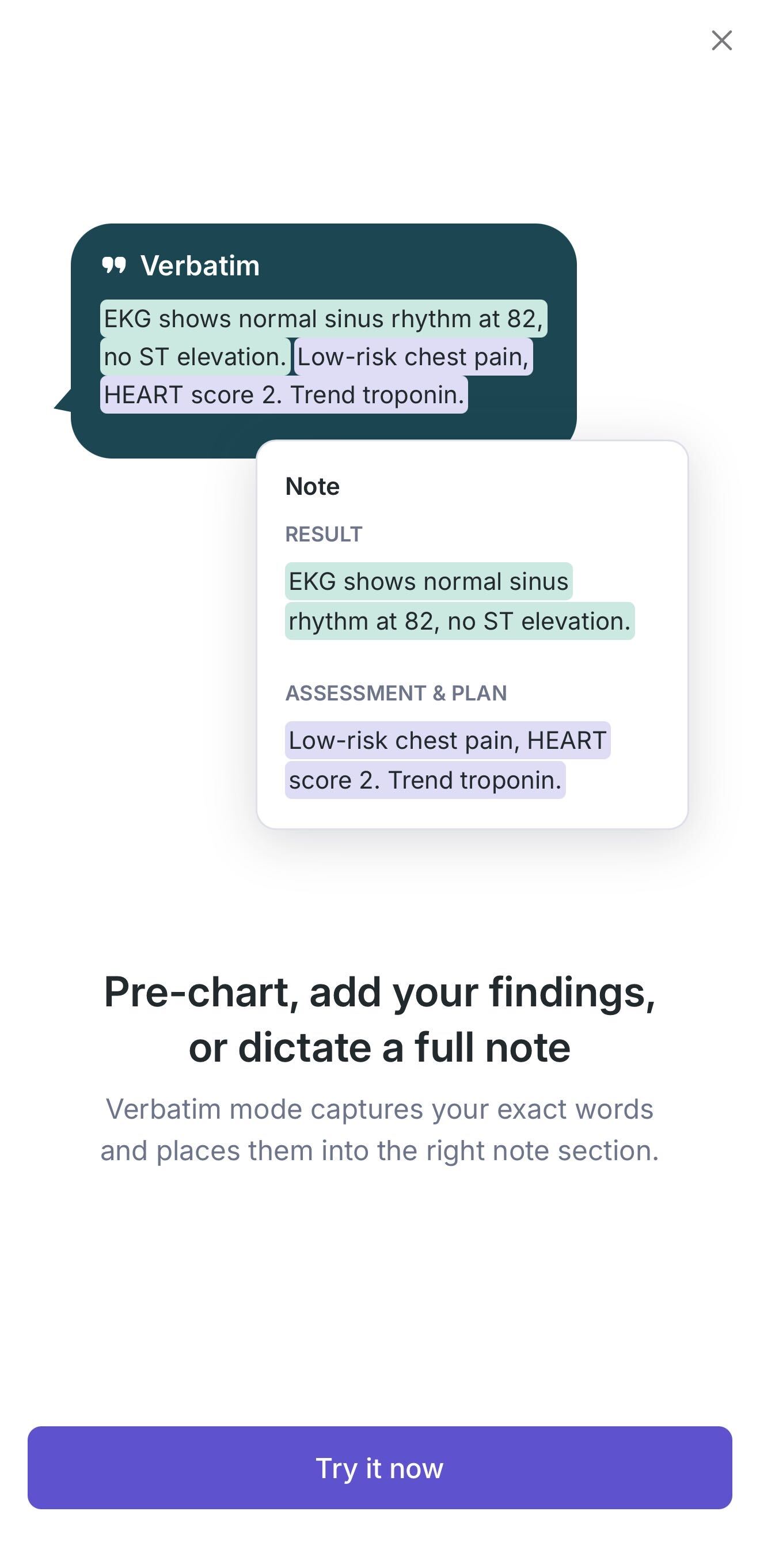
Your clinical facts, in the right section of the note.
Here’s where Verbatim fits best - the moments in a visit, the use cases, and the specialties getting the most from it:
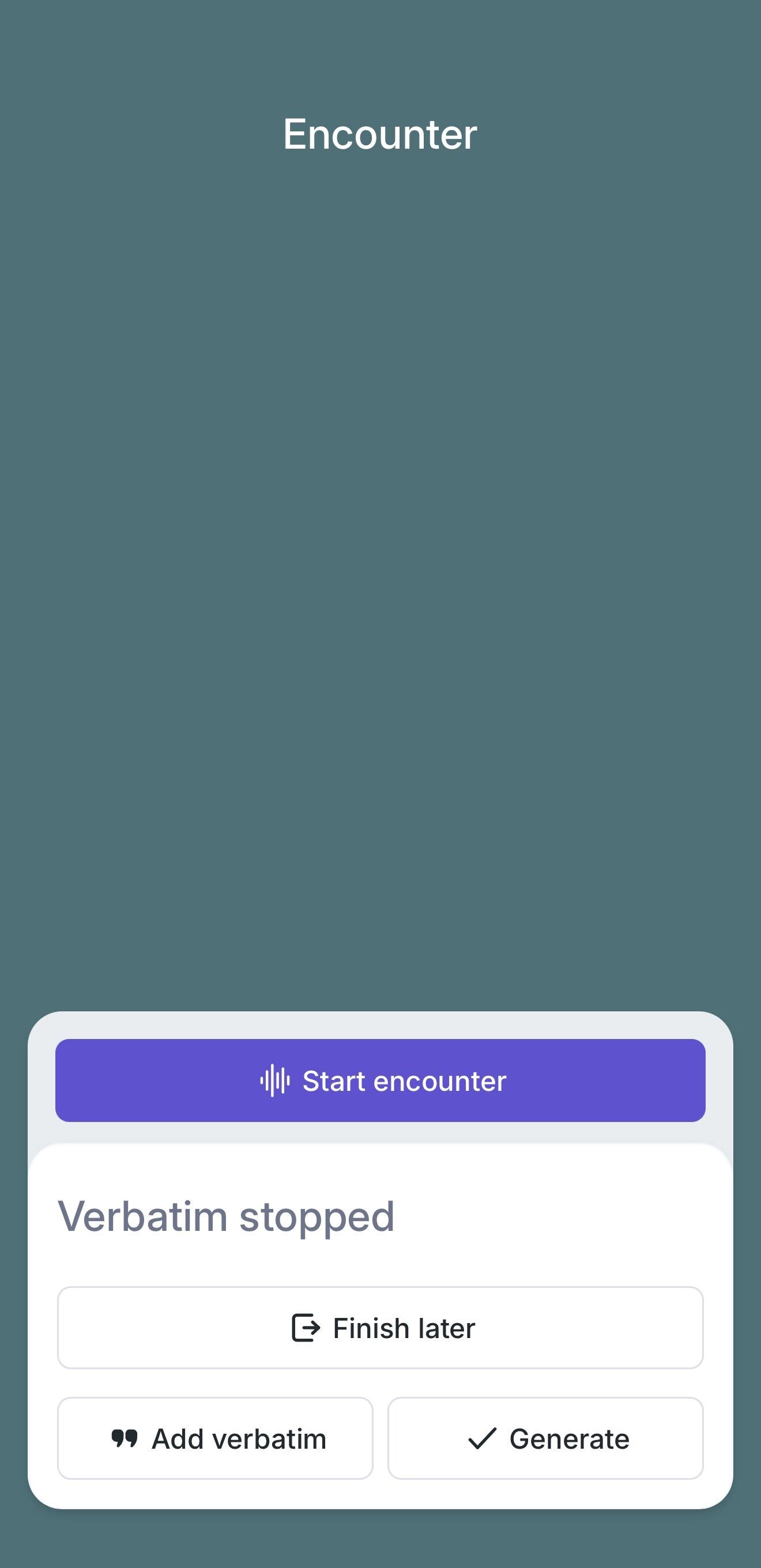
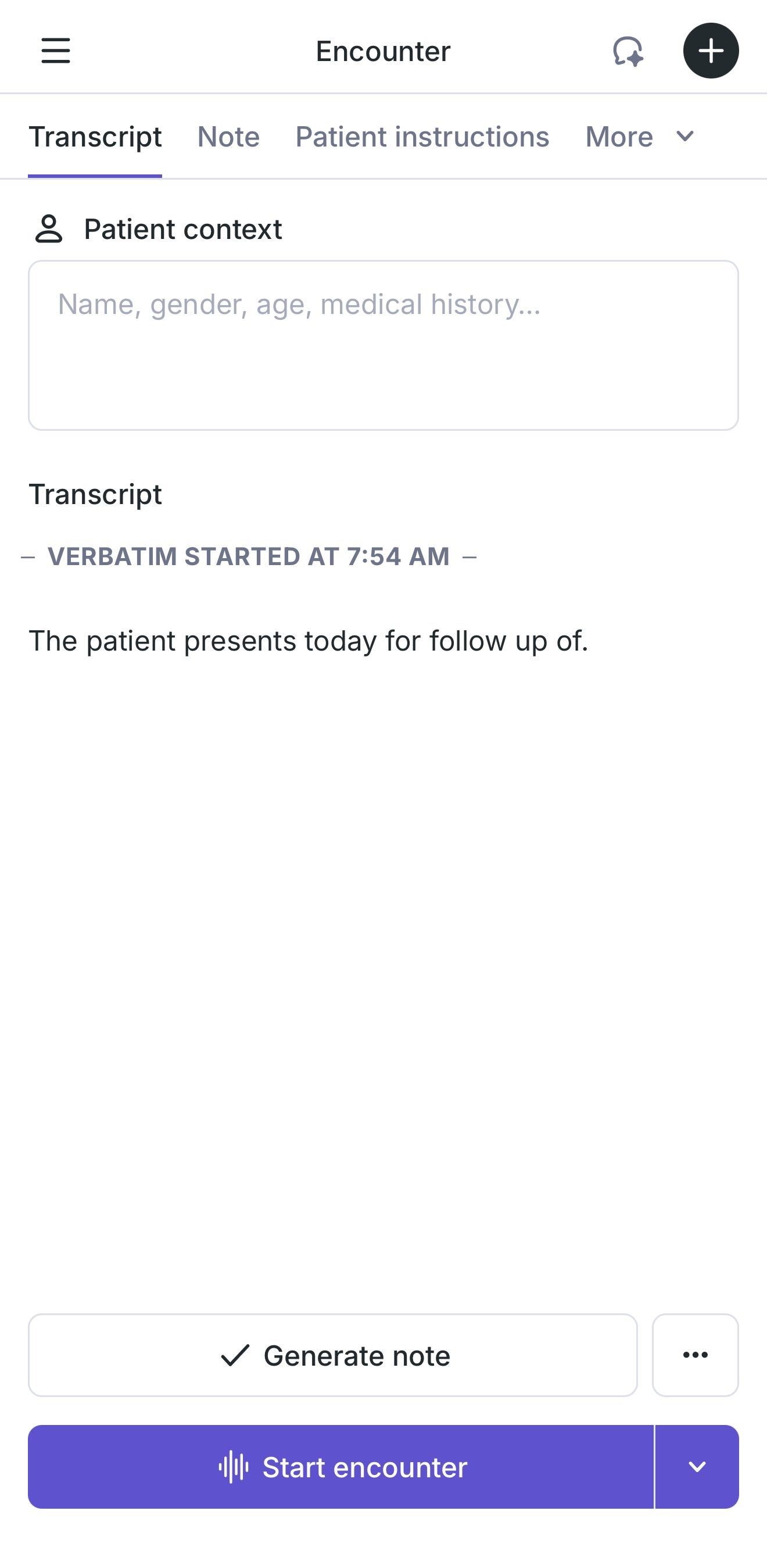
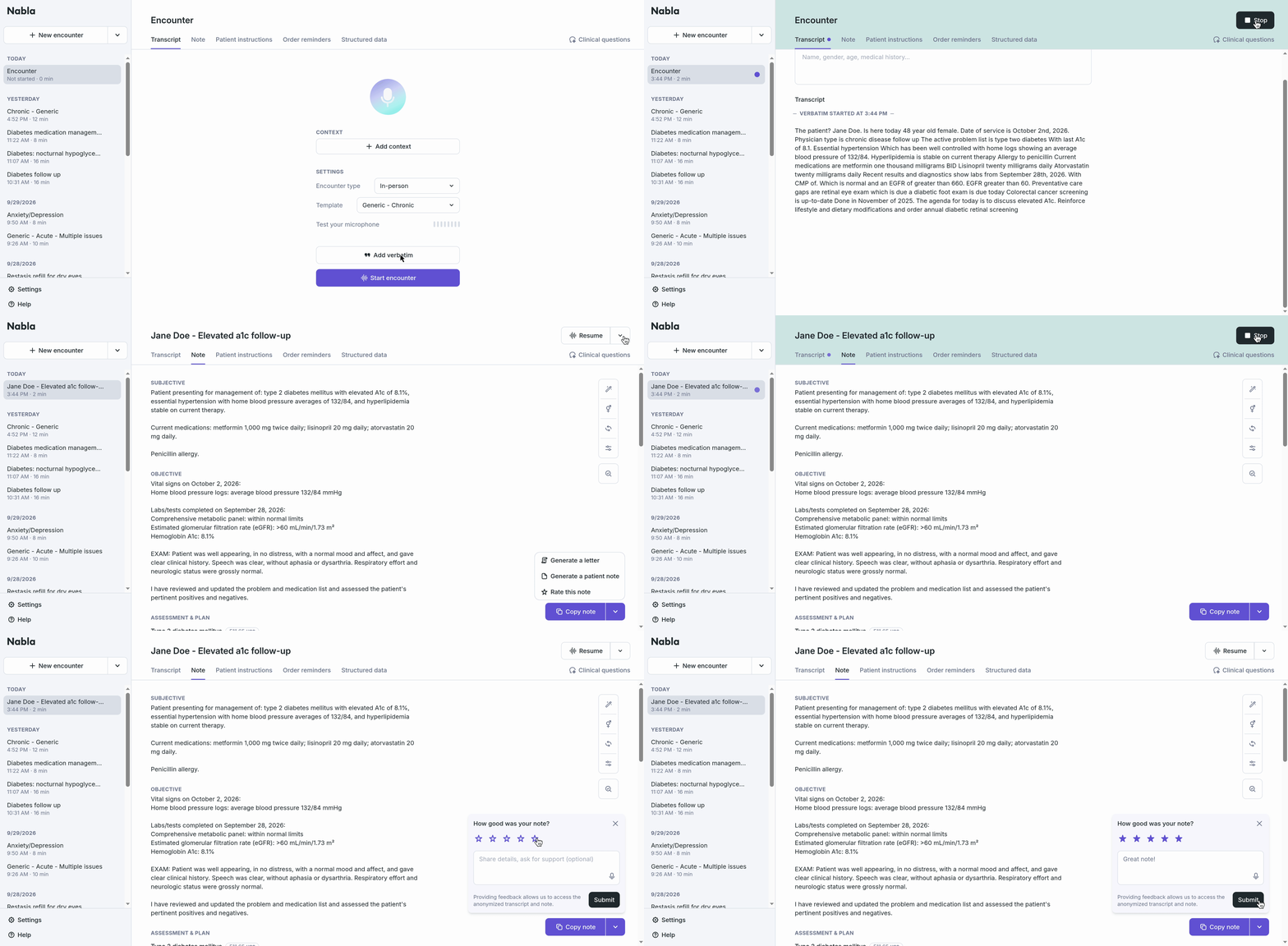
Use it anytime, before, during or after an encounter.
Your clinical facts, not a summary
Add to the structured note, no patient required
Auto-routes to the right section
Only fillers disappear - nothing else changes
When to use it
Before the patient arrives pre-chart lab results and imaging interpretation.
Add findings after the visit exam findings, results interpretation, Assessment & Plan enrichment, and reasoning you’d rather not say in front of the patient - added to the existing note.
Dictate a full note, no ambient session needed. Built for fast-paced settings, procedure notes, and handoff summaries.
Procedure notes Handoff summaries
Assessment & Plan enrichment
Lab review
Point-of-care imaging interpretation
Who/What
Primary Care: Physical exam findings, point-of-care interpretation, and observations best not voiced with the patient present.
Behavioral Health: Clinical observations best not voiced with the patient present, such as signs of anxiety or depression.
Inpatient: Daily rounding - lab results and the plan for the day.
Nursing: Bedside shift reports and event notes: changes in condition, interventions, patient and family communication, safety events, procedures, and transfers.
Surgery: Procedure notes and point-of-care imaging interpretation.
Cardiology: Interpretation of TEE, EKG, and stress test results.
Orthopedics: Point-of-care imaging interpretation.
Any specialty Physical exam findings and Assessment & Plan enrichment.
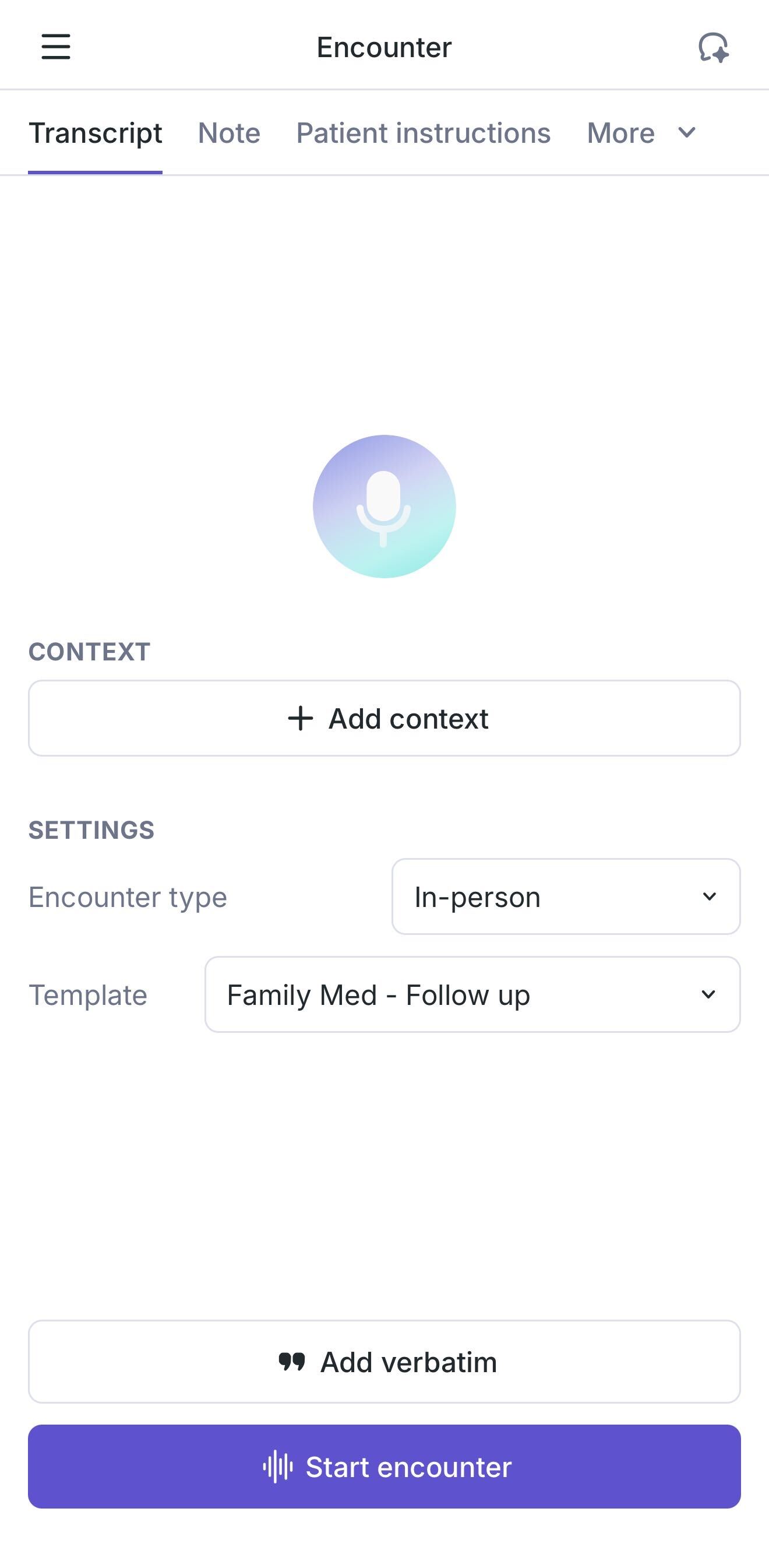
Mobile:
|
|
|
|
|
|